The World is Changing (Again)
The rapid evolution of the world in recent years reflects a remarkable shift in various sectors.

Numerous innovations are reshaping how we interact with our environment, particularly through advancements in technology, science, and business. This ongoing transformation is not solely attributed to artificial intelligence; it encompasses groundbreaking developments in biotechnology, renewable energy, and digital communications.
Technology is progressing at an accelerated pace. The implications for industries are profound. The rise of AI can significantly enhance efficiency. It can also create new growth avenues. This shift arises from the increasing importance of adaptability.
Forward-thinking in business practices is now crucial. These qualities help navigate the complexities of a changing world.
In conclusion, the interplay between innovation and adaptability is driving unprecedented changes across sectors, underscoring the need for a proactive approach to embrace the future.
Artificial Intelligence: The New Foundation
Artificial intelligence has emerged as the cornerstone of this transformation, moving beyond science fiction to become an integral force reshaping every walk of life.
As of 2024, approximately 42 percent of enterprise-scale companies have actively deployed AI in their business operations, with 92 percent planning to increase their investments in AI technology from 2025 to 2028.
This widespread adoption reflects a fundamental shift in how humanity interacts with technology, processes information, and organizes work.
The integration of AI into daily operations extends far beyond simple automation. Modern AI systems are designed with intentionality, combining information from various sources, analyzing material instantly, and acting on insights derived from real-time data. These capabilities enable machines to make sophisticated decisions that were previously the exclusive domain of human intelligence. From healthcare diagnostics and financial risk management to manufacturing optimization and transportation planning, AI is demonstrating the capacity to augment and sometimes surpass human capabilities in specific tasks.
The economic implications of this AI revolution are staggering. A project by PriceWaterhouseCoopers estimated that artificial intelligence technologies could increase global GDP by $15.7 trillion. This growth represents a full 14 percent increase by 2030. The potential for this growth stems from efficiency gains and AI’s role as a General Purpose Technology. This technology applies across different industries and sectors. It fundamentally improves productivity and standards of living. As AI systems become more sophisticated, they gain the ability to understand context. They learn from interactions and can adapt to user needs. This evolution creates a more intelligent and responsive technological ecosystem.
Voice as the New Computer Interface
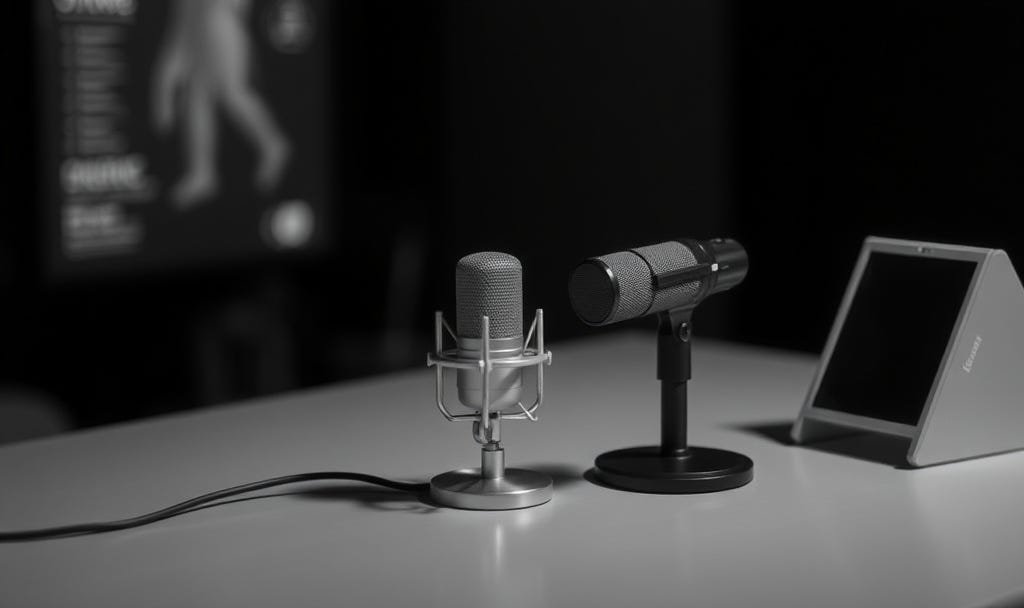
Perhaps the most profound shift in the AI revolution is the emergence of voice as the primary interface between humans and computers. For 150 years, humanity has relied on keyboards as the dominant input method. However, this paradigm is rapidly changing. Voice interfaces powered by advanced AI now enable natural and intuitive communication with technology. By the end of 2025, over 8.4 billion voice assistant-powered devices will be in use globally. This number exceeds the global population.
This transformation represents far more than a simple change in input method. Voice interfaces use natural language processing and understanding. They allow users to communicate with technology using everyday speech patterns. This approach is easier than rigid syntax or specific commands. As a result, it alters the relationship between humans and machines. Technology becomes more accessible to a broader range of users, regardless of their technical expertise. The conversational nature of voice interfaces reduces cognitive load and enables hands-free operation. Additionally, they allow users to articulate thoughts at the speed they naturally think. This speed is approximately 150 words per minute for speech versus 40 words per minute for typing.
This shift has significant implications for various aspects of human activity. Voice interfaces are becoming more emotionally intelligent. They can detect user emotions through tone and patterns. Additionally, they adapt responses based on emotional context. This emotional awareness enables more empathetic and personalized interactions. It is particularly valuable in customer service, healthcare, and therapeutic applications. Furthermore, integrating voice AI into ambient computing environments creates systems that operate seamlessly in the background. These systems provide contextual assistance without requiring explicit user commands. As these technologies mature, voice could replace traditional applications in many areas. This is especially true for tasks that involve simple, repetitive actions or require rapid information retrieval.
The broader societal impact of voice interfaces extends beyond convenience and efficiency. Voice technology improves accessibility for individuals with visual impairments, dyslexia, or physical challenges that make keyboard use difficult. It enables multitasking and productivity in situations where hands-free operation is essential. This includes activities such as driving, cooking, or caring for children. However, this transformation also raises important ethical considerations. Issues regarding privacy, data security, gender representation, and the potential reinforcement of social biases embedded in the systems are significant. As voice interfaces become more prevalent, it becomes crucial to establish clear ethical standards. Diverse development teams are needed to ensure these technologies serve the betterment of all humanity.
The Impact of Wispr Flow
In this landscape of voice-powered transformation, Wispr Flow has emerged as a significant innovation. It exemplifies the potential of voice as a computer interface. Wispr Flow is an AI-powered voice dictation tool. It transcribes and processes speech across all applications on Mac, Windows, and iPhone. This tool transforms natural spoken language into polished, formatted text with remarkable accuracy and speed. What distinguishes Wispr Flow from traditional speech-to-text systems is its optimization for understanding not just what people say. It also comprehends how they intend to communicate. Wispr Flow automatically removes filler words, corrects mistakes, and adjusts tone based on the application context.
The performance metrics of Wispr Flow show a significant increase in productivity potential. Users consistently report speeds ranging from 150 to 179 words per minute with Wispr Flow. This represents a four-times improvement over the average typing speed of 40 words per minute. This speed advantage is not merely about word count. It fundamentally changes how users approach content creation. They are no longer constrained by typing mechanics. Instead, users can articulate their thoughts at their natural pace. They can capture ideas immediately without losing momentum. One user, an above-average typist at 90 words per minute, reported consistently reaching 175 words per minute with Wispr Flow. This user noted that “the speed isn’t just about words per minute—it’s about how voice input changes your thinking process.”
The practical applications of Wispr Flow cover a wide range of professional activities. For email composition, users report that drafting time is reduced from 7-8 minutes to just 1-2 minutes for a 200-word message. The AI handles punctuation, capitalization, and tone automatically. Software developers use Wispr Flow to dictate code, commit messages, documentation, and pull request descriptions. The AI understands programming context and formats code appropriately. Content creators, consultants, educators, journalists, and customer support professionals integrate Wispr Flow into their workflows. They capture notes, draft reports, respond to messages, and document insights without the constraints of manual typing.
The technological sophistication underlying Wispr Flow’s performance includes several key features that enhance usability and personalization. The system maintains a personal dictionary. It automatically learns unique words, industry jargon, and proper nouns specific to each user. Wispr Flow provides AI-powered auto-edits that transform rambling thoughts into clear, formatted text. These edits remove filler words and typos. The application adjusts tone automatically based on the app being used. It becomes more casual for Slack and more professional for email, creating output that sounds authentically like the user. Wispr Flow supports over 100 languages and can detect and switch between them mid-sentence. This capability accommodates global workflows. Additionally, the system offers snippet libraries for voice shortcuts. Users can speak a cue and receive full formatted text for frequently used phrases.
User testimonials and reviews consistently highlight the transformative nature of Wispr Flow on work patterns and productivity. One detailed review noted, “Wispr Flow has fundamentally changed how I work.” Users appreciate its combination of speed, accuracy, and universal compatibility. This tool is essential for anyone who thinks faster than they type. Users particularly value the seamless integration across all applications through keyboard shortcuts. This feature enables them to maintain their flow state without switching contexts. Additionally, the ability to work while pacing or moving around offers ergonomic benefits. It improves posture and allows for physical movement during cognitive tasks. Many users report that after experiencing the speed advantage of voice dictation with Wispr Flow, they replace 95 percent of their typing with voice input.
The broader implications of tools like Wispr Flow extend beyond individual productivity gains. As Reid Hoffman observed in a conversation with Wispr Flow’s founder Tanay Kothari, “the keyboard had a good run, but the future is Voice AI as the primary input.” This sentiment reflects a growing recognition. Voice interfaces are not merely an alternative input method. They represent a fundamental shift in human-computer interaction. Voice AI eliminates the necessity to structure thoughts to conform to machine expectations. This fosters more intuitive exchanges. It enables workers to complete tasks faster in hands-free or time-sensitive situations. The generative AI capabilities integrated with voice input allow users to speak for extended periods. The AI can summarize the essence of their intent. It can take actions on their behalf and produce output that maintains their authentic voice without manual editing.
Wispr Flow has achieved high transcription quality. It also maintains ease of use across applications. This positions it as a harbinger of broader trends in workplace technology. According to research from Jabra, over twice as many workers think voice is a better way to communicate with AI. Specifically, 36 percent prefer voice compared to 15 percent who prefer typing prompts. The majority of companies, 82 percent, are curious about AI’s workplace benefits. Nearly half, 43 percent, plan to incorporate AI into their working practices. Voice-first tools like Wispr Flow are accelerating this adoption. They demonstrate that voice input can deliver speed, quality, personalization, and contextual awareness that rivals or exceeds traditional typing.
Looking Forward: The Voice-First Future
As we approach 2025 and beyond, artificial intelligence and voice interface technology converge. This convergence marks a pivotal moment in how humans interact with the digital world. The shift from keyboards to voice as the primary computer interface is not a distant possibility. It is an emerging reality that reshapes work, communication, and creativity across industries. Tools like Wispr Flow exemplify the maturation of this technology. They offer practical, measurable improvements in productivity and user experience.
The future trajectory points toward more advanced voice-AI systems. These systems will act as ambient assistants that are always available. They will integrate seamlessly into our environments. These systems will become more aware of context. They will understand not just explicit commands but also user needs from cues, emotions, and behavior. Voice interfaces will connect with extended reality, autonomous systems, and collaborative workflows. This will make complex technology easier for everyday users. As natural language understanding improves, the line between human conversation and machine interaction will blur. This will enable more natural and efficient forms of digital communication.
The world is indeed changing again. This time, it is learning to listen. The innovations embodied by AI-powered voice interfaces like Wispr Flow are not merely incremental improvements. They are foundational shifts in human capability. By enabling people to think, create, and communicate at the speed of speech, these technologies unlock human potential. This potential was previously constrained by the limitations of keyboards. As this transformation accelerates, those who embrace voice-first workflows and cultivate adaptability will be best positioned to thrive. In this world, speaking is faster, more natural, and more powerful than typing has ever been.